The Mechanics of Stand Mixers
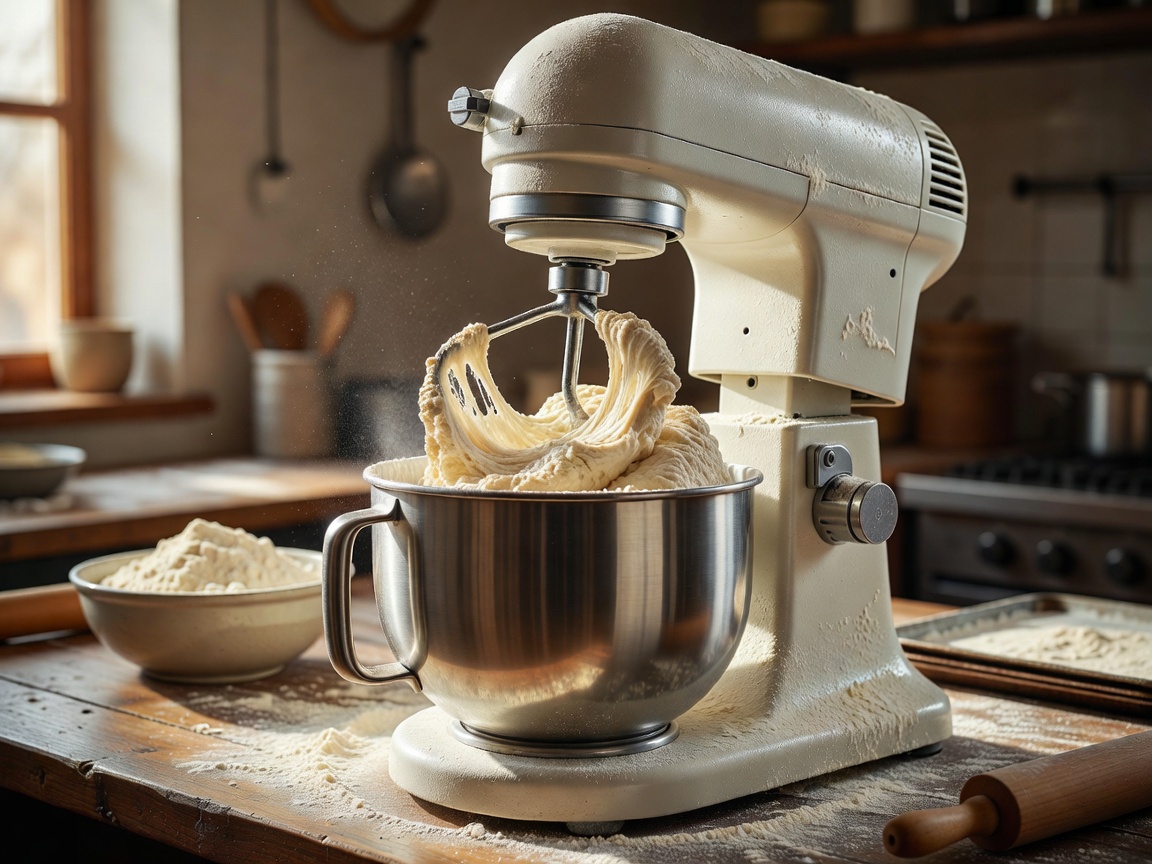
A high-quality stand mixer is often considered the centerpiece of a baker's kitchen. Beyond its aesthetic appeal, it is a complex piece of engineering designed to handle everything from gently folding delicate soufflé batters to aggressively kneading dense, low-hydration bagel doughs. Selecting the right mixer requires looking past the glossy exterior to understand the motor architecture and the physical chassis design.
Planetary Mixing Action Explained
The standard operating mechanism of premium stand mixers is known as "planetary action." In this design, the attachment (beater, whisk, or dough hook) spins on its own axis in one direction, while the entire central hub rotates around the bowl in the opposite direction. This intersecting orbit ensures that the attachment reaches every part of the stationary bowl, pulling ingredients from the edges into the center without requiring the user to constantly scrape down the sides manually.
Tilt-Head vs. Bowl-Lift Configurations
Stand mixers predominantly fall into two structural categories, each catering to different workflow requirements and spatial limitations.
- Tilt-Head Designs: The upper housing of the mixer is mounted on a hinge, allowing the user to physically tilt the motor head backward to access the bowl and change attachments. These models are generally shorter, making them ideal for kitchens with low overhead cabinets. However, the hinge mechanism is a structural weak point; when battling stiff, heavy doughs, the head can visibly buck or bounce, stressing the locking pin over time.
- Bowl-Lift Designs: The motor head is rigidly fixed to the vertical pillar. The bowl is secured by two arms and raised into the mixing position via a mechanical lever. This locked-in, one-piece design provides vastly superior stability and torque resistance, making it the preferred choice for those who frequently bake large batches of bread. The trade-off is a taller profile and a slightly steeper learning curve when attaching the bowl.
Motor Dynamics: AC vs. DC Motors
When reviewing specifications, the wattage rating can be notoriously misleading. A mixer claiming 1000 watts is not inherently better than one claiming 500 watts if they utilize different motor technologies.
Historically, most home stand mixers used AC (Alternating Current) motors. AC motors require more wattage to generate power, and they often lose torque when operating at lower speeds—exactly when you need it most for kneading dough. Modern, high-end mixers are increasingly transitioning to DC (Direct Current) motors. DC motors are remarkably efficient; a 500-watt DC motor can deliver significantly more usable torque at lower RPMs than a 1000-watt AC motor, all while operating much quieter and generating less internal heat.
Internal Gearing and Longevity
The transmission of power from the motor to the mixing hub relies on internal gears. Budget categories frequently use nylon or plastic gears. While these serve as a deliberate fail-safe (stripping the gear rather than burning out the motor if overloaded), they lack longevity. Professional-grade residential mixers utilize all-metal gears encased in heavy grease. While more durable, metal gears do require occasional maintenance, and it is crucial to avoid sudden speed changes that could shear the metal teeth under heavy loads.
Attachment Hubs: Beyond Baking
A significant value proposition of the stand mixer is the universal power hub located at the front of the motor head. This PTO (Power Take-Off) port allows the mixer's motor to drive external attachments like meat grinders, pasta rollers, and grain mills. When evaluating a mixer, verifying the compatibility and availability of these secondary attachments can transform the appliance from a dedicated baking tool into a comprehensive culinary workstation.