Navigating the World of Air Fryers
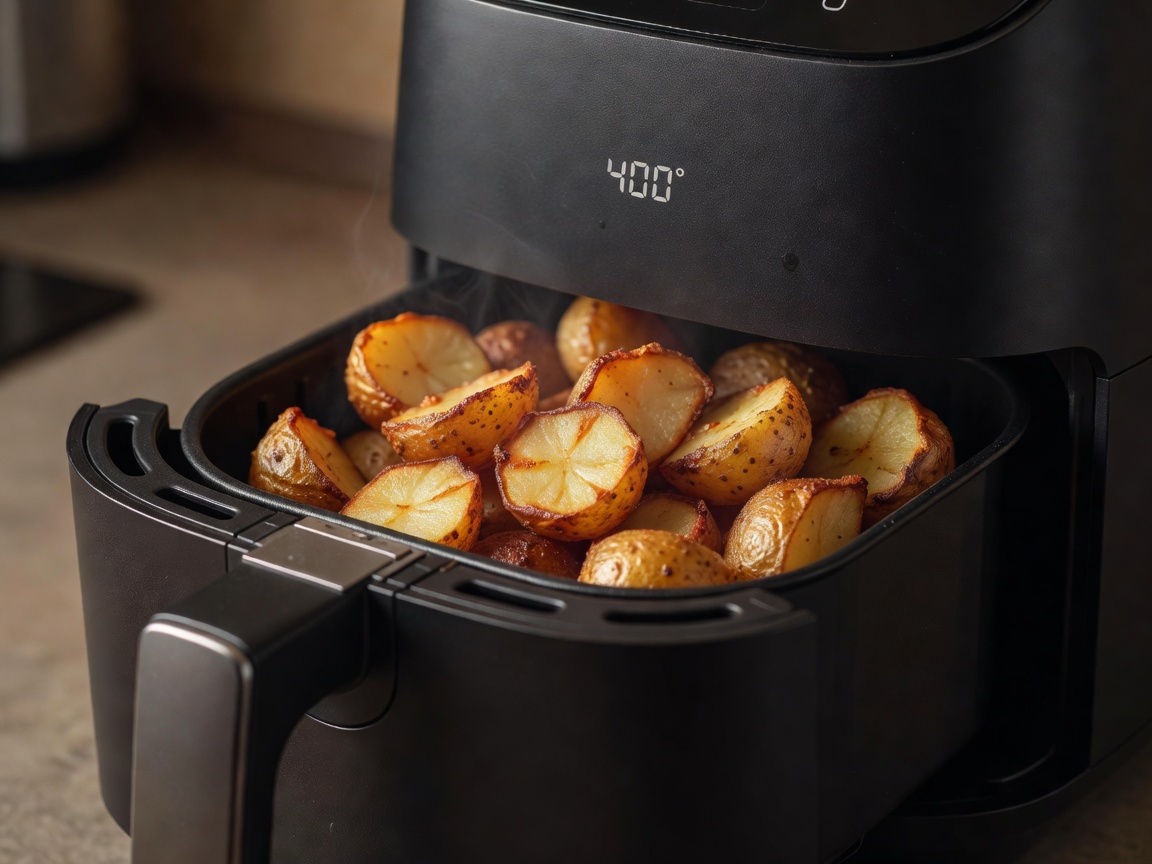
Despite the terminology, an air fryer does not fry. It is, mechanically speaking, a highly aggressive, compact convection oven. By understanding how these devices manage airflow and thermal density, consumers can make informed decisions about capacity, style, and utility, moving past the marketing hype to recognize the true culinary benefits.
The Mechanics of High-Velocity Convection
Traditional ovens rely on radiant heat and natural convection, which can be slow and uneven. Standard convection ovens add a fan to circulate that air. Air fryers take this a step further by utilizing a compact heating chamber paired with a significantly larger, high-velocity fan situated directly above a concentrated heating element.
This localized, rapid circulation of air achieves two things: it radically accelerates heat transfer to the food's surface, and it continuously strips away the microscopic layer of moisture that surrounds food as it cooks. This rapid dehydration of the exterior is what triggers the Maillard reaction (browning) at a much faster rate than a conventional oven, simulating the crispness of deep frying with a fraction of the lipid usage.
Basket Style vs. Oven Style
When selecting a unit, the primary structural decision lies between the drawer-based "basket" style and the door-based "oven" style. Each configuration presents distinct aerodynamic profiles.
- Basket Style: Features a pull-out drawer with a perforated inner basket. The compact size of the drawer ensures maximum air velocity and exceptional crisping. The downside is a smaller footprint, requiring food to be cooked in multiple batches, and an inability to monitor the food visually without opening the drawer and halting the cooking cycle.
- Oven Style: Resembles a traditional toaster oven, often featuring multiple racks and a glass door. This allows for a larger overall capacity and horizontal spread. However, because the internal volume is larger, the air velocity is slightly diminished compared to a basket style, which can result in marginally less aggressive crisping unless the unit compensates with a substantially more powerful fan.
Evaluating Capacity Metrics
Capacity is generally measured in quarts or liters. However, raw volumetric measurement can be highly misleading. Because convection relies on air hitting the surface area of the food, stacking ingredients vertically in a deep, narrow basket severely hinders the cooking process, leading to steamed, uneven results.
When assessing capacity, prioritize the width and depth of the basket or racks. A shallow but wide 5-quart basket is practically superior to a deep, narrow 6-quart basket, as it allows more food to lay flat in a single layer, ensuring maximum exposure to the circulating thermal currents.
Preheating and Temperature Stability
A common debate revolves around the necessity of preheating. Because the internal volume of an air fryer is so small, they reach target temperatures incredibly fast—often within three to five minutes. While many users skip preheating for convenience, preheating is crucial for items requiring immediate, intense surface heat to achieve a sear, such as proteins or dense root vegetables. For reheating pre-cooked items or baking delicate goods, a cold start is often acceptable.
Cleaning and Longevity
The high-velocity fans pull aerosolized fats and oils upward toward the heating element. Over time, this grease can accumulate on the fan blades and the roof of the interior chamber, which is notoriously difficult to clean. To ensure longevity, users should seek models with removable, dishwasher-safe splatter shields or exposed elements that are easy to access with a damp cloth once cooled. Regular maintenance of this upper chamber prevents the appliance from smoking during high-temperature operations.